Running from the Mirror
Millions ran to the Western world to escape the catastrophic consequences of forced conformity. Why, are we so shocked when the West fights to preserve the very freedom? An unflinching civilisational critique and the mirror before us all.
The Haunting Paradox of Theocratic Tyranny and Being Shocked by Self-Defence
Millions ran to the Western world to escape the catastrophic consequences of forced conformity. Why, then, are we shocked when the West fights to preserve the very freedom that made it a sanctuary?
I. The Architecture of a Sanctuary
Every civilisation inherits certain ideas so deeply embedded within its daily existence that they become almost invisible. We notice them only when they begin to disappear. A stranger arriving in Australia might admire the skyline, the beaches, or the material prosperity. I notice something else.
I notice unlocked doors in our country towns. I notice low decorative fences separating neighbours instead of towering concrete walls topped with broken glass. I notice women moving freely through the public square, dressed as they please, without seeking permission from fathers, brothers, or husbands. I notice strangers trusting one another enough to queue without fear, leave fuel pumps unattended before paying, disagree without violence, and share the same public space despite profound differences of culture, politics, and religion.
Most people would simply call these ordinary parts of life. They are not. They are the fragile architecture of a sanctuary.
Like every sanctuary throughout history, these high-trust spaces did not appear by accident. They were patiently inherited, defended, refined, and passed from one generation to the next. Long before the newest migrant arrived, generations of ordinary people had already built the legal traditions, unwritten social expectations, and cultural habits that made this country sufficiently stable for others to seek refuge within it. Sanctuaries do not emerge because people merely wish them into existence. They emerge because enough people accept the difficult responsibility of preserving the conditions that allow strangers to live together without descending into perpetual conflict.
That distinction matters. A sanctuary is not defined by the people it welcomes. It is defined by the rigid conditions that make welcome possible.
Those conditions are often mistaken for ordinary conveniences precisely because they have been quietly working for generations. High-trust societies become so accustomed to their own success that we begin treating trust as a natural resource rather than a fragile inheritance. Freedom becomes assumed. Stability becomes expected. Tolerance becomes routine. Eventually, people forget that each of those qualities rests upon invisible foundations requiring continual maintenance.
The irony is difficult to ignore. Many who now call the West home did not leave prosperous, peaceful societies in search of better weather. They fled environments where trust had collapsed, where religious or political conformity overwhelmed personal liberty, where public life became increasingly governed by fear rather than confidence. They came because this “sanctuary civilisation” had already solved problems that their own societies had not.
That should prompt a profoundly uncomfortable question. If these inherited conditions were valuable enough to attract millions from every corner of the world...
…what obligation do we have to preserve them?
Because every sanctuary carries a paradox that history repeats with relentless consistency: the stronger its reputation for safety becomes, the greater the pressure placed upon the very foundations that created its safety in the first place.
The question, therefore, is not whether a sanctuary should welcome newcomers. The question is whether a sanctuary can remain a sanctuary if it gradually abandons the conditions that made refuge possible. Everything that follows begins there.
II. The Inheritance We Carry
There is another reality we rarely acknowledge when discussing migration, integration, or multiculturalism. Human beings do not migrate as blank slates. We carry more than passports, qualifications, family photographs, and treasured possessions. We carry habits. We carry deep-seated assumptions. We carry unconscious instincts about authority, family, honour, religion, public behaviour, and social expectations. Long after our luggage has been unpacked, those invisible inheritances continue travelling with us.
Behavioural scientists have observed this for generations. Children learn by watching, absorbing the behavioural scripts of the world around them. Families pass values from one generation to the next, transmitting developmental scripts that once ensured survival in low-trust environments. Geography can change in a single day. Human conditioning rarely does.
That should not surprise us. It is one of the reasons civilisations survive at all. The very behaviours that make a society stable are patiently taught, repeatedly reinforced, and eventually accepted as normal. They become the default settings through which people interpret reality. Most never realise they possess those settings until they step into a civilisation operating under an entirely different one.
This is true of every people. It was true of post-war Europeans arriving on our shores. It was true of Vietnamese families rebuilding their lives after war. It was true of my own journey when I migrated from India to Australia, carrying assumptions formed by the society that raised me. It is equally true of migrants arriving today from societies shaped by Islamic majorities.
None of this is an accusation. It is an observation about the remarkable persistence of human conditioning. The mistake begins when we assume that moving to a new country automatically rewrites the behavioural architecture formed by the old one. It does not.
If a society has spent generations organising daily life around a particular religious rhythm, that rhythm becomes ordinary. A state-enforced public expectation surrounding dress, food, family, or religious authority ceases to feel like a restriction because it has never been experienced as anything else.
Likewise, a society that has spent generations organising itself around entirely different assumptions comes to regard those assumptions as equally ordinary. Quiet suburban mornings become normal. Public disagreement without fear becomes normal. School lunches reflect longstanding local customs. Churches, Christmas carols, and a lone man standing on a street corner reading a Bible become part of the background scenery rather than provocative political statements.
Neither civilisation experiences its own defaults as unusual. Both simply experience them as life. That is why civilisational friction should never surprise us. It is not born from malice. More often, it is born from the raw physics of exposure.
III. The Geometry of Friction
Once we accept that human beings carry the conditioning of the worlds that shaped them, friction ceases to be a mystery. It becomes inevitable.
Not because either civilisation is inherently wicked. Not because one culture possesses superior human worth. But because different civilisational ecosystems produce different behavioural defaults, and those defaults inevitably collide when different civilisations, through their people, begin sharing the same public space.
Modern political discourse often encourages us to interpret that friction almost exclusively through the language of prejudice. If a long-established community resists a new social expectation, the explanation is frequently assumed to be fear, intolerance, or irrational hostility. That diagnosis is often made far too quickly. Human experience teaches something rather more ordinary: people experience intrusion in proportion to what they have previously been conditioned to absorb.
A person raised beside railway tracks sleeps peacefully through the passing trains; another, spending a single night in the same house, lies awake listening to every carriage. The railway has not become louder. The conditioning of the listener has changed. The same principle applies across cultures.
A person raised on the rich, layered spices of a traditional vindaloo or a Thai green curry—deceptively calm and creamy in appearance, yet packing a fiery punch—scarcely notices the heat. Someone encountering those same flavours for the first time may find even a mild butter chicken unexpectedly overwhelming. The meal has not changed. The conditioning of the person eating it is different.
The default setting of an imported culture does not have to be radical to be experienced by a host population as a total spatial invasion. It is an issue of exposure, not malice.
Consider the ancient architecture of Aesop’s fable of the Rabbit and the Porcupine. The porcupine is not the villain of the burrow. It did not choose its quills, and it does not shoot them as darts with malicious intent. It is merely operating in its default state of being a porcupine. Yet, when it steps inside the tight, enclosed confines of a rabbit’s home, the mere default fact of its existence makes the burrow unliveable, arguably for the rabbit. The porcupine is blameless for its spikes, but the rabbit is equally blameless for resisting them. A house never designed to absorb that level of physical encroachment cannot be, and must not be, expected to quietly surrender its dimensions.
If a suburban neighbourhood has spent generations waking up to nothing but the morning wind, an Islamic call to prayer broadcast at dawn is not registered as benign diversity; it is experienced as structural noise pollution that no other faith would ever be permitted to broadcast. If a community has never historically navigated the public zoning of halal, it possesses every natural right to ask: why now, and why me?
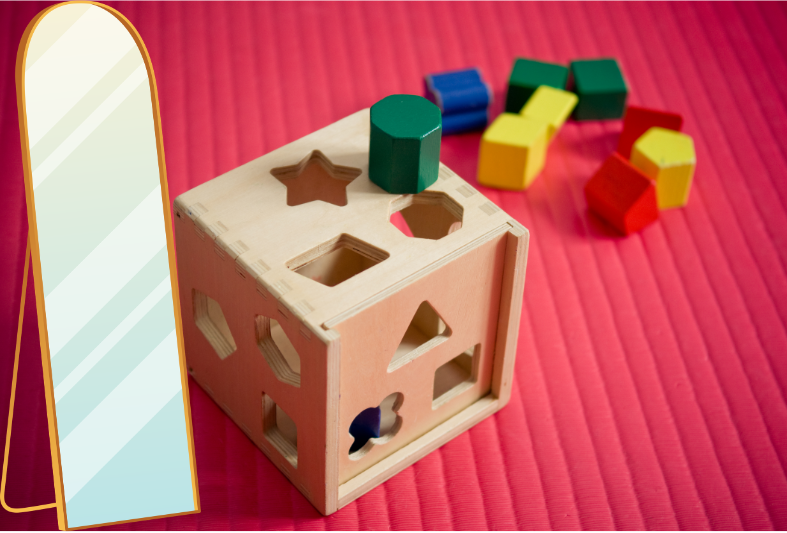
Consider the simple mechanics of a child's shape-sorter toy. The lid contains many different openings, and each accommodates a different shape. Over generations, us Australians have deliberately carved new openings into the lid of our civilisational bucket. We carved a space for our foundational Indigenous heritage, a profound structural slot for our British institutional inheritance, and successive openings for post-war Europeans, Chinese communities, Vietnamese families, Indians, Africans, and refugees from every corner of the world.
Did you know that Australia has successfully integrated people from nearly 190 different nations. Makes me really proud and privileged for the opportunity to call this amazing nation, my home.
The remarkable achievement is not that diversity entered the bucket. It is that the bucket remained intact. Every new shape found a place without requiring the earlier openings in the lid to be sealed over. Once each unique peg passed through its respective opening, it dropped into the shared depth of the bucket below. The star did not dispute the circle; the square did not pick a fight with the triangle. Despite their vastly different shapes, colours, and origins, they became part of the same collective volume.
It is the practical, physical expression of the anthem we so fiercely cherish: “We are one, but we are many… and from all the lands on earth we come.” That timeless lyric works precisely because it balances both halves of the human equation—the sovereign unity of the shape-sorter bucket, and the rich diversity of the pegs within it.
The geometry begins to fail only when a newly arrived wave of pegs decides the pre-existing openings themselves are an offense. The debate is no longer about welcoming another shape. It has become an aggressive demand to redesign the lid itself. Currently, our bucket accommodates people from nearly one hundred and ninety different cultural origins. In the fractured landscape of global geography, those cultures live apart—separated by harder borders, deep geopolitical divides, and weapons. If one nation chooses to defy global gravity by welcoming the whole world within itself, it does not mean we are under a suicidal obligation to erase our own identity to do so. Do we now want to smash the Australian bucket into one hundred and ninety pieces? Weren’t we all doing perfectly fine when we were divided into one hundred and ninety separate parts of this world? Isn’t it then, fair to ask the question: why bring that divide to Australia? Why smash the bucket that has survived, and well and truly flourished, for the last 125 years!
If the foundational shapes of the very sanctuary that rescued you are so inherently offensive to your worldview, and if you cannot coexist alongside the other many shapes in the depth of the bucket, it raises a visceral, inescapable question: Do you even belong in this bucket at all?
IV. The Immune System of a Sanctuary
Every living system possesses mechanisms of preservation. The human body fights infection. A forest regenerates after fire. A civilisation is no different. It survives because it continually distinguishes between adaptation that strengthens the whole and change that quietly dissolves the very conditions upon which the whole depends.
That is why resistance should not automatically be interpreted as hostility. Quite often, resistance, put simply, is the very immune system of a healthy society recognising that its baseline geometry is being altered.
The mistake of our age has been to confuse every act of preservation with an act of prejudice. They are not the same thing.
Indeed, if every instinct to preserve inherited institutions, traditions, or cultural norms is dismissed as irrational hostility, then a sanctuary is left with no legitimate means of defending itself except after the damage has already been done.
By then, it is no longer preservation. It is archaeology!
Western resistance to socio-religious demands that alter the inherited conditions of a free society is the predictable response of a civilisation attempting to preserve the house.
This is a pattern playing out across the entire Western hemisphere—from the shifting political alignments in Washington to the deep social friction fracturing the United Kingdom, Europe and here is Australia. The moment accommodation becomes contingent upon the systematic removal of inherited symbols, inherited customs, inherited expectations, or inherited freedoms, the discussion has already moved beyond coexistence. It has become a question of civilisational replacement.
That is precisely why asymmetry matters. When an Australian city proudly closes streets so that Diwali can be celebrated at Melbourne’s Federation Square, or grants permits for Chinese New Year dragon processions, or provides police escorts for Hare Krishna chariot festivals through the heart of Brisbane, it demonstrates the remarkable confidence of a civilisation secure enough to share its public square. Those celebrations are additions. They enrich the landscape. They do not require Christmas to disappear. They do not require churches to apologise for existing. They do not require the national flag to be folded away because someone arriving yesterday finds it uncomfortable.
Addition and subtraction are not morally equivalent. One enlarges the common square. The other steadily empties it. Yet, the host is increasingly expected to demonstrate tolerance by becoming progressively less visible within his own home. His traditions become negotiable. His history becomes embarrassing. School curricula now send students on mandatory, graded excursions to mosques, synagogues, and temples, while traditional Bibles are quietly removed from classrooms and pork options are scrubbed from lunch menus. The argument for pork here is symbolic, because public institutions by having actively eliminated what was entirely normal and foundational for a significant majority population, signalling that the pre-existing cultural fabric must contract to accommodate the newcomer.
Previous waves of migrants—from the Europeans to the Asians and Africans—gladly adapted to the pre-existing curriculum without demanding that public institutions structurally prioritize or fund their specific heritage and linguistics as a condition of their presence.
When the burden of adaptation flows in only one direction, it is neither pluralism nor equality. It is imbalance. It triggers a profound preservation response within the host population.
By demanding that the host culture systematically erase its own silhouette to avoid causing "offense," modern progressive advocates are not fostering inclusion. They are forcing a catastrophic cultural freeze upon the diaspora. They are encouraging newcomers to lock themselves into a rigid, historical time-capsule of the very social conditioning they crossed oceans to escape, while demanding the host society commit cultural suicide to accommodate the regression.
Consider the cruel irony of a citizen rescued from a hyper-surveilled, low-trust totalitarian state. If his well-meaning hosts refuse to teach him how to walk freely—if they lock him inside a room and replicate the exact atmosphere of suspicion 'because it is all he has ever known'—they have not honoured his heritage. They have institutionalized his trauma. They have ensured the walls of his prison travel with him.
Every concession appears insignificant when viewed in isolation. Every subtraction feels reasonable on its own. It is only years later that people look around and struggle to identify precisely when the character of the house changed. A sanctuary does not cease being a sanctuary because newcomers arrived. It ceases being a sanctuary when the inherited conditions that sustained it are no longer considered worthy of preservation.
If preserving those conditions inevitably produces resistance... perhaps the more honest question is not why resistance exists. Perhaps the more honest question is why we have become so fiercely determined to interpret every act of self-preservation as an act of hostility or a crime."
V. Running from the Mirror
This is where the conversation becomes deeply personal. No people on earth understand the crushing consequences of religious tyranny better than the ordinary, law-abiding men and women who fled it.
Millions escaped the brutality of ISIS. Others fled the Taliban, the IRGC, Hezbollah, Hamas, sectarian violence, authoritarian clerics, or societies where questioning the prevailing religious order carried consequences too terrible to contemplate. They did not flee because they despised faith. Quite the opposite. Many fled because they wished to practise their faith without fear, coercion, or violence. Others simply wished to live ordinary lives beyond the reach of ideological domination.
They did not merely cross borders; they crossed civilisations. They came to societies where the law restrained power, where public disagreement did not ordinarily invite imprisonment, where neighbours of different faiths shared the same streets, where governments changed without revolutions, and where the citizen generally trusted tomorrow to resemble yesterday.
In other words, they came to a sanctuary.
That sanctuary existed because generations before them had already fought the difficult, often unglamorous work of preserving the habits, institutions, and freedoms that made it possible.
Yet, a profound psychological blindness often occurs in the wake of such displacement. When these very same individuals encounter the ordinary defensive responses of their new home, a strange disorientation takes hold. As a diaspora, you arrive in the West and immediately begin expecting that public spaces, public school menus, and legal expectations structurally bend to accommodate your heritage. But surely you, of all people, understand why a society becomes fiercely protective of the conditions that keep it free. You have already lived through the catastrophic alternative.
You know exactly what happens when a single ideological framework gradually expands beyond private conviction and begins reshaping the public square. You know what happens when people become afraid to question. You know what happens when public institutions lose the confidence to defend themselves. You have seen that story before, haven’t you?
Is it possible that the exact behavioural scripts which once helped people survive difficult civilisational environments are now being unconsciously carried into a sanctuary built upon entirely different foundations? Isn’t it?
We see the creeping mechanics of this un-recalibrated conditioning spilling onto our streets and public transit. Pre-existing residents face verbal hostility for simply walking their dogs through neighbourhoods they have inhabited for decades, because an imported default setting views the animal as impure. Commuters on public buses are subjected to glares of moral condemnation for eating a sandwich during the daylight hours of Ramadan.
When you demand that a secular society restrict free speech, alter its historical traditions, or view a Western woman’s autonomy as provocative and as an invitation to unwanted attention, the mirror becomes unyielding – you are executing a tragic subconscious cycle. You are actively reproducing the exact behavioural mechanics of the oppressors you left behind.
I know how easily these conditioning travels because I carried my own here. I was born in India, and when I arrived in Australia, I brought assumptions formed by the society that raised me. Some remained valuable. Others quietly changed as I came to understand the civilisational habits that made Australia what it already was before I arrived. That process was not a loss of identity; it was an education in gratitude. I did not conclude that Australia should become more like the place I had left; I concluded that there must have been something profoundly valuable about the society I had chosen to join.
That realisation changed the question.
Instead of asking why Australia was not more like home... I began asking what had made Australia different enough for me to call it home in the first place. Perhaps that is the mirror standing before all of us. Not only migrants. Everyone.
If we genuinely value, the sanctuary we inherited—or the sanctuary we deliberately chose—should our first instinct be to reshape it in the image of the world we left behind... or to understand the conditions that made it worth entering at all?
VI. Shouldn't You Know Better?
Every article in this series has asked the reader to rotate the lens. The first asked us to look inward before demanding more from civilisation. The second asked believers to look inward before demanding more from society.
This article also asks us to look inward once more.
Why was this place a sanctuary? What made it different? What conditions made millions willingly leave everything they knew in order to begin again here?
Those questions matter because sanctuaries are never self-sustaining. Like trust, freedom, and peace, they survive only while enough people remain willing to preserve the conditions that created them.
That preservation is not always comfortable. Nor is it always applauded. Every generation inherits the responsibility of deciding which foundations are so essential that they cannot quietly be surrendered simply because defending them invites criticism.
To preserve is not to hate.
To defend is not necessarily to fear.
To resist change is not automatically to reject people.
Quite often, it is to recognise that some things are load bearing. Remove enough of them and the house still appears standing... right up until the moment it doesn't.
This is why I have questioned the modern diagnosis of so many contemporary cultural conflicts. Perhaps what is routinely described as irrational hostility is the instinct of a civilisation recognising that the inherited conditions of its sanctuary are being systematically dismantled.
Not because newcomers are unwelcome, but because sanctuaries have always depended upon boundaries, habits, and inherited norms that cannot be endlessly negotiated without eventually ceasing to exist.
Every society possesses the right—and the moral responsibility—to preserve the civilisational conditions that make its own existence possible.
The remarkable irony is that millions of migrants already understand this truth better than anyone else. They proved it the day they left. They did not abandon stable, flourishing societies. They abandoned societies where the conditions of sanctuary had already broken down. That decision was not born of weakness. It was born of wisdom.
Which is why I find one final paradox so difficult to ignore.
You left because East was East. So why are you disappointed that West is West?
West is not East. It cannot be. It does not want to be!
And the West has every right to protect itself for what it is!
If you recognised the necessity of leaving a civilisation after the conditions that sustained it had been lost... why should it surprise you that another civilisation resists losing the conditions that made it worth coming to? If that is what you wanted, are you sure you can find it in the West?
The East had the West to run to. The West has nowhere left to go.
That is not a justification for hostility.
It is a reminder that preservation is not the enemy of compassion.
It is one of its preconditions!
A sanctuary that forgets how to preserve itself eventually loses the ability to offer sanctuary to anyone—including those who arrive tomorrow seeking exactly what yesterday's arrivals once found.
Millions ran to the Western world to escape the catastrophic consequences of forced conformity. Why, then, are we so shocked when the West fights to preserve the very freedom that made it a sanctuary?
And if you, of all people, understand how easily a sanctuary can be lost...
Shouldn't you know better?